
Sleep is not passive downtime. It is the period during which your body performs its most critical repair work, including tissue regeneration, hormonal regulation, and nervous system recovery. This post explains the direct relationship between sleep quality and injury recovery outcomes, what happens physiologically when sleep is inadequate, and how to optimize sleep as a deliberate part of your rehabilitation plan.
Why Sleep Is Your Most Powerful Recovery Tool
In clinical rehabilitation, much of the conversation centers on what happens during waking hours: the exercises performed, the manual therapy received, the load placed on recovering tissue. What is frequently underweighted is what happens during sleep, where the majority of tissue repair, growth hormone release, and nervous system recovery actually takes place.
The relationship between sleep and injury recovery is not incidental. It is mechanistic. Sleep duration and quality directly influence the rate at which damaged tissue is repaired, the effectiveness of the immune response to injury-related inflammation, and the sensitivity of the central nervous system to pain signals. A rehabilitation plan that does not account for sleep quality is operating at a significant disadvantage.
At Axis Therapy & Performance, sleep quality is a routine part of our clinical intake conversations. When a client is recovering more slowly than their tissue presentation would suggest, inadequate sleep is one of the first variables we examine. Our physiotherapy team integrates this understanding into individualized recovery plans because outcomes depend on it.
What Happens in Your Body While You Sleep
Sleep is structured in cycles of approximately 90 minutes, each containing both non-rapid eye movement and rapid eye movement stages. The specific stage most relevant to physical recovery is slow-wave sleep, also known as deep sleep or stage three NREM sleep. This is where the majority of the body’s repair work occurs.
- Growth hormone release: Approximately 70 percent of daily growth hormone secretion occurs during slow-wave sleep. Growth hormone is the primary anabolic signal that drives muscle protein synthesis, connective tissue repair, and bone remodeling. For anyone recovering from a soft tissue injury, surgical repair, or stress fracture, this hormonal environment during sleep is not supplementary to recovery. It is the mechanism of recovery.
- Cytokine production: The immune system releases pro-inflammatory cytokines during sleep that coordinate the tissue repair response. When sleep is shortened or disrupted, this cytokine cascade is impaired, slowing the transition from the inflammatory phase of healing to the proliferative phase where new tissue is laid down.
- Protein synthesis: Muscle and tendon protein synthesis rates peak during sleep when amino acid availability from the evening meal combines with the hormonal environment of deep sleep. Inadequate sleep duration compresses this window and reduces the net protein synthesis that drives tissue repair.
- Nervous system recovery: Sleep is when the central nervous system clears metabolic waste products that accumulate during waking activity, consolidates motor learning from rehabilitation exercises, and downregulates the pain sensitization that develops with injury. Poor sleep is directly associated with increased central sensitization, meaning the brain and spinal cord become more responsive to pain signals than the peripheral tissue state warrants.
How Sleep Deprivation Slows Healing
The research on sleep deprivation and physical recovery is consistent. A study referenced through the National Institutes of Health found that adults sleeping fewer than six hours per night showed significantly impaired wound healing rates, elevated inflammatory markers, and reduced immune cell activity compared to adults sleeping seven to nine hours. These findings translate directly to musculoskeletal injury recovery.
Clinically, this shows up in several ways that physiotherapists and rehabilitation clinicians recognize:
- Slower tissue repair: The structural rebuilding of damaged ligament, tendon, and muscle tissue takes measurably longer when sleep is inadequate. Clients who are managing chronic sleep deficits often present with recovery timelines that extend significantly beyond what their injury severity would predict.
- Elevated pain sensitivity: Sleep deprivation lowers the pain threshold and increases the perceived intensity of existing pain. This creates a compounding problem: pain disrupts sleep, and disrupted sleep amplifies pain. Breaking this cycle often requires clinical intervention that addresses both sides simultaneously.
- Increased re-injury risk: Fatigue from inadequate sleep impairs neuromuscular coordination, reaction time, and proprioceptive accuracy. Athletes and active clients returning from injury who are not sleeping adequately are at significantly elevated risk of re-injury during the return-to-sport phase.
- Reduced training adaptation: For clients in rehabilitation who are rebuilding strength and capacity, the adaptations that exercise stimulates are consolidated during sleep. Cutting sleep short reduces the physiological return on the rehabilitation work being performed.
The Pain-Sleep Cycle and How to Break It
One of the most clinically challenging aspects of injury recovery is the bidirectional relationship between pain and sleep. Pain disrupts sleep onset and maintenance. Sleep deprivation amplifies pain sensitivity. Left unaddressed, this cycle becomes self-sustaining and can significantly extend recovery timelines.
Our sports injury rehabilitation approach addresses this cycle directly. Manual therapy techniques including soft tissue mobilization and joint mobilization have a documented effect on reducing pain-related sleep disruption by decreasing the peripheral nociceptive input that keeps the nervous system activated during sleep onset. Reducing pain through effective treatment is one of the most direct ways to improve sleep quality in injured clients.
Positioning and load management during sleep are also clinically relevant. Depending on the nature and location of the injury, specific sleep positions can either protect recovering tissue or place it under sustained mechanical stress that impairs healing. A physiotherapist can advise on appropriate positioning based on your specific injury presentation.
Sleep Quality vs. Sleep Duration: Both Matter
The common focus on sleep duration, typically seven to nine hours for adults, can obscure the importance of sleep quality. A person who spends nine hours in bed but experiences frequent micro-arousals, chronic pain disruption, or elevated stress-driven cortisol before bed may obtain far less slow-wave sleep than the total duration suggests.
Markers of poor sleep quality include difficulty falling asleep despite fatigue, frequent waking through the night, waking unrefreshed despite adequate hours, and elevated resting heart rate on waking. If these patterns are present during injury recovery, they warrant attention as a clinical variable, not simply a lifestyle inconvenience.
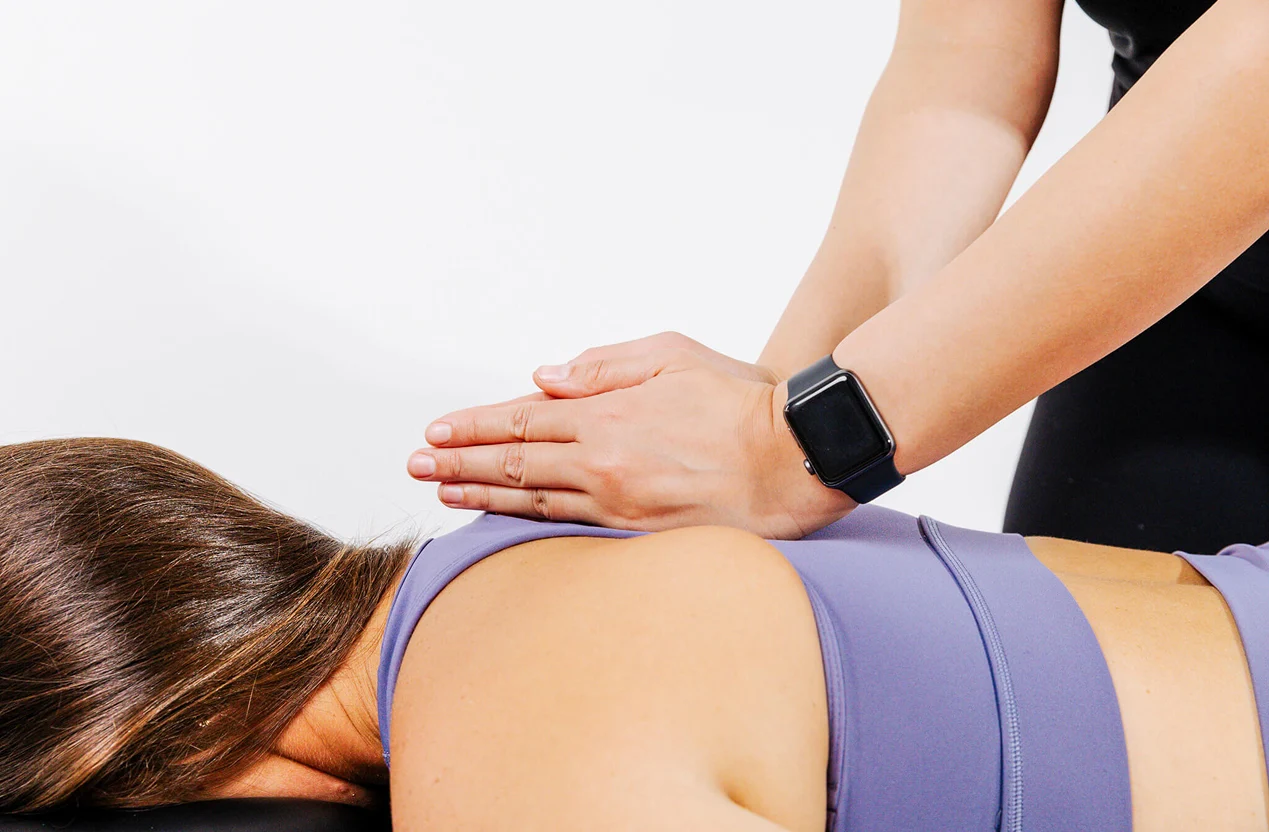
Our massage therapy sessions directly support sleep quality by reducing sympathetic nervous system activation and cortisol levels, promoting the parasympathetic state that deep sleep requires. For clients managing both pain and sleep disruption, this represents a clinically meaningful intervention beyond simple symptom relief.
Practical Strategies to Optimize Sleep During Recovery
Evidence reviewed through the American Academy of Sleep Medicine supports a consistent set of behavioral practices that improve sleep quality in adults managing pain and injury:
- Maintain consistent sleep and wake times: Circadian rhythm consistency is the single most impactful behavioral lever for sleep quality. Irregular sleep timing disrupts the natural cortisol and melatonin rhythms that govern sleep architecture, even when total sleep hours are adequate.
- Manage light exposure: Bright light exposure in the morning supports cortisol awakening response and circadian timing. Reducing blue light exposure in the 90 minutes before sleep supports melatonin onset and sleep quality.
- Control the sleep environment: Core body temperature drops during sleep onset. A cooler sleep environment, typically between 16 and 20 degrees Celsius, supports this thermoregulatory process and facilitates deeper sleep.
- Address pre-sleep pain proactively: If pain is disrupting sleep onset or maintenance, this is a clinical problem worth raising directly with your physiotherapy team. Medication timing, positioning strategies, and manual therapy frequency can all be adjusted to reduce nighttime pain interference.
- Limit stimulant intake strategically: Caffeine has a half-life of approximately five to seven hours in most adults. Consuming caffeine after midday can reduce slow-wave sleep duration even when sleep onset is not noticeably affected.
Sleep as a Performance Variable for Recovering Athletes
For athletes moving through rehabilitation and returning to sport, sleep is not only a recovery tool but a performance variable. Research cited by the National Institutes of Health consistently shows that sleep extension in athletes, deliberately increasing sleep duration beyond habitual levels, produces improvements in reaction time, accuracy, sprint performance, and injury prevention outcomes.
Our performance training team integrates sleep quality monitoring alongside training load assessment because the two are inseparable variables in managing adaptation and injury risk. An athlete who is sleeping poorly is tolerating less training stress than their program assumes, and this mismatch is a reliable predictor of overuse injury and impaired return-to-sport outcomes.
When to Raise Sleep Concerns With Your Clinician
If you are recovering from an injury and experiencing persistent sleep disruption, raise it with your physiotherapy team rather than managing it in parallel. Sleep quality is a clinical variable that changes what is achievable in rehabilitation and how quickly it can be achieved. Our team at our Toronto locations treats sleep as part of the recovery picture, not a separate lifestyle issue, and can adjust your plan accordingly.
Frequently Asked Questions
- How many hours of sleep do I need during injury recovery?
Seven to nine hours remains the evidence-based recommendation for most adults, but recovery from significant injury or surgery may benefit from additional sleep, particularly in the acute phase. The quality of those hours matters as much as the quantity. If you are regularly waking unrefreshed or experiencing significant nighttime pain disruption, these are worth addressing clinically rather than simply increasing time in bed.
- Can poor sleep actually make my injury worse?
Yes. Chronic sleep deprivation impairs the immune and hormonal mechanisms of tissue repair, elevates pain sensitivity through central sensitization, and increases re-injury risk by compromising neuromuscular coordination and reaction time. In a meaningful clinical sense, insufficient sleep during recovery extends recovery timelines and increases complication risk.
- Why does my pain feel worse at night?
Pain frequently intensifies at night for several reasons: reduced distraction from daytime activity makes pain more perceptible, the natural drop in cortisol in the evening removes its anti-inflammatory effect, and lying still can increase stiffness in inflamed tissues. Positioning, pain management timing, and pre-sleep relaxation strategies can all help. If nighttime pain is a consistent issue, raise it with your physiotherapist.
- Does massage therapy actually improve sleep?
Yes. The evidence supports massage therapy as an effective intervention for improving sleep quality, primarily through its effect on the autonomic nervous system. Massage reduces sympathetic activation, lowers cortisol, and promotes the parasympathetic state that sleep onset and deep sleep require. For clients managing pain-related sleep disruption, this represents a clinically useful tool beyond simple relaxation.
- Should I nap during injury recovery?
Short naps of 20 to 30 minutes can support recovery without disrupting nighttime sleep architecture if timed appropriately, typically before 3:00 pm. Longer naps or late-afternoon napping can reduce sleep pressure and make it harder to maintain the circadian consistency that deep sleep depends on. If you are using naps to compensate for chronic nighttime sleep deficits, addressing the underlying disruption is the more sustainable strategy.
Recover Faster by Taking Sleep Seriously
Sleep is not passive. It is the most active recovery process your body runs, and the quality of your rehabilitation depends on it. If sleep disruption is affecting your recovery, the team at Axis Therapy & Performance can help you address it as a clinical priority alongside your hands-on treatment. Book your appointment today and give your recovery every advantage it deserves.
Key Takeaways
- Approximately 70 percent of daily growth hormone secretion occurs during deep sleep, making sleep the primary biological driver of tissue repair and recovery.
- Sleep deprivation slows healing, amplifies pain sensitivity, and increases re-injury risk by impairing neuromuscular coordination and proprioception.
- The pain-sleep cycle is bidirectional and self-reinforcing. Breaking it requires addressing both pain and sleep quality simultaneously through clinical intervention.
- Sleep quality matters as much as sleep duration. Frequent disruption, poor sleep architecture, and pre-sleep pain interference all reduce the physiological value of time spent in bed.
- Sleep should be treated as a clinical variable in rehabilitation planning, not a lifestyle afterthought. Raise sleep concerns with your physiotherapy team.