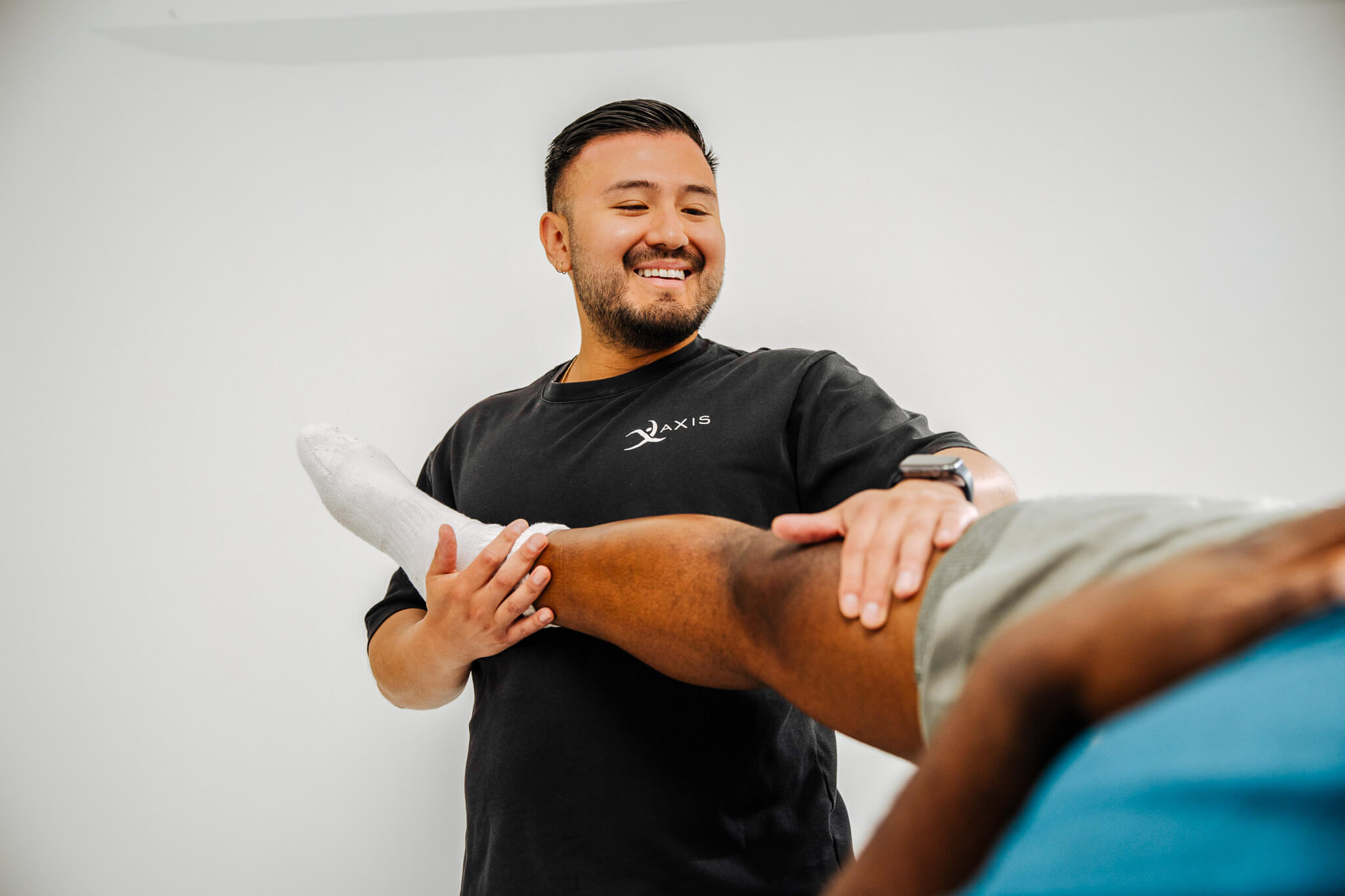
Knee pain in Markham is rarely just a knee problem. The hip, ankle, and core all play roles in how much load your knee absorbs. Axis Therapy and Performance offers knee pain physiotherapy in Markham that looks at the full kinetic chain, treats what is actually driving the pain, and rebuilds the strength and mechanics needed for lasting relief. Rest and bracing manage symptoms, but our specialized knee injury rehab in Markham fixes them.
Your Knee Pain Is Probably Not Just a Knee Problem
The knee sits between two powerful, mobile joints: the hip above and the ankle below. When either fails to function properly, the knee compensates. Physio for knee pain in Markham at Axis addresses the full picture because treating the knee in isolation like rubbing cream on the kneecap or wearing a compression sleeve rarely produces lasting results.
Knee pain physiotherapy in Markham at Axis addresses the full picture because treating the knee in isolation, rubbing cream on the kneecap, wearing a compression sleeve, doing quad sets in a chair, rarely produces lasting results.
Knee Conditions Treated at Axis Markham
- Patellofemoral Pain (Runner’s Knee): Diffuse aching around the kneecap during squats, stairs, running, or prolonged sitting. One of the most common knee presentations and highly responsive to targeted hip and quad strengthening combined with load management.
- Patellar Tendinopathy (Jumper’s Knee): Pain at the inferior patellar pole, common in basketball, volleyball, and any activity with repeated jumping. A load-related condition that requires progressive tendon loading rather than rest.
- Meniscus Injuries: Clicking, catching, locking, or swelling after a twisting mechanism. Many meniscus tears are manageable with structured knee pain physiotherapy in Markham. Surgery is not automatically required.
- ACL Injuries: Whether managed conservatively or post-reconstruction, the rehabilitation quality is the primary determinant of full return to sport. Review the OrthoInfo ACL injury patient guide for a comprehensive patient overview of ACL injury and recovery options.
- MCL Sprains: Most MCL injuries resolve well with structured physiotherapy and rarely require surgical intervention.
- IT Band Friction Syndrome: Lateral knee pain in runners and cyclists, almost always driven by hip weakness and training load rather than a tight IT band requiring stretching.
- Osteoarthritis: Arthritic knees benefit substantially from physiotherapy. Strengthening the surrounding musculature reduces joint loading, improves pain, and preserves function.
How Axis Treats Knee Pain
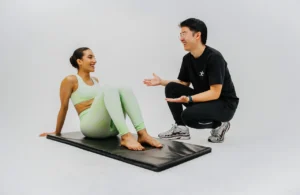
- Full Kinetic Chain Assessment: We test the knee, hip, ankle, and core. Movement screening includes squats, lunges, single-leg work, and gait analysis. The goal is identifying what is weak, what is stiff, and what is moving poorly throughout the entire lower limb chain.
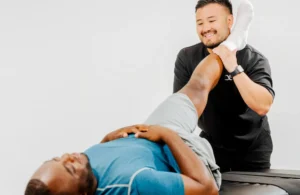
- Manual Therapy: Joint mobilizations, soft tissue work, and acupuncture and dry needling restore mobility and reduce pain, creating the conditions for active rehabilitation to progress effectively.
- Progressive Strengthening: Quads, glutes, hamstrings, and calves are built through systematic, phase-appropriate loading. No exercises are skipped or rushed. Each phase progresses only when the criteria for that phase have been met.
- Movement Retraining: If knee valgus during squats, altered landing mechanics, or asymmetric running patterns are contributing to pain, we coach the corrections directly.
- Return-to-Sport Planning: Clearance is based on objective criteria: strength symmetry, plyometric testing, sport-specific movement quality, not just pain levels on an average day.
The Mental Side of Knee Injuries
Knee injuries change how people move, train, and approach their sport. Over time, compensations and hesitation become their own source of limitation, separate from the physical injury itself.
Knee pain physiotherapy in Markham at Axis addresses this through graduated exposure to progressively challenging movements in a controlled setting. By the time patients are cleared for full activity, they have tested their knee systematically under load. That process builds the kind of confidence that sticks, not the kind that just assumes the knee will hold up and hopes for the best.
Axis Is Now in Markham
The Axis Markham clinic at 2880 Major Mackenzie Dr E, Unit 2, brings the same framework of care that has served athletes, active adults, and rehabilitation patients across the GTA. Physiotherapy, chiropractic care, sports massage therapy, and performance training are all available under one roof. Patients can also be seen at our Riverdale clinic, Scarborough clinic, and Mississauga clinic locations. Self-referral rights for Ontario patients are outlined by the Ontario Physiotherapy Association.
Stop Adjusting Your Life Around Knee Pain
Avoiding stairs, modifying every exercise, stepping back from your sport. None of that needs to be permanent. Knee pain physiotherapy in Markham at Axis builds the capacity your knee needs to handle what you are asking it to do, then confirms it is ready through objective testing. That is how you get back to full confidence, not cautious optimism.
No referral is needed to book in Ontario. Book your knee pain physiotherapy assessment at Axis Markham at 2880 Major Mackenzie Dr E, Unit 2. Move freely, train hard, and trust your body again.
Frequently Asked Questions
1. Can physiotherapy fix knee pain without surgery?
Many knee conditions, including meniscus tears, patellofemoral pain, tendinopathies, MCL sprains, and mild osteoarthritis, respond very well to physiotherapy without requiring surgical intervention. Even for conditions where surgery may eventually be appropriate, physiotherapy before and after the procedure significantly improves outcomes.
2. How long does knee pain physiotherapy take?
This depends on the underlying condition. Patellofemoral pain and tendinopathies typically improve within six to ten sessions over six to eight weeks. ACL rehabilitation is a nine to twelve-month commitment. Your physiotherapist will outline a realistic timeline after your initial assessment.
3. Do I need imaging (MRI or X-ray) before starting physiotherapy?
Not always. Many knee conditions can be accurately assessed and effectively treated through clinical examination without imaging. If imaging is warranted, your physiotherapist will communicate this and help coordinate the appropriate referral.
4. Can knee pain physiotherapy in Markham help with osteoarthritis?
Yes. Research consistently supports exercise-based physiotherapy as a first-line treatment for knee osteoarthritis. Strengthening the muscles around the joint reduces load on damaged cartilage, improves pain, and maintains mobility, often more effectively than passive treatments alone.
5. Is knee pain physiotherapy the same as seeing a sports medicine doctor?
They serve different but complementary roles. Sports medicine doctors diagnose injuries and may recommend imaging or injection therapies. Physiotherapists build and deliver the rehabilitation program that restores function. At Axis, your physiotherapist coordinates with medical professionals when necessary while managing the hands-on and exercise-based components of your recovery.
Key Takeaways
- Knee pain in Markham is commonly driven by hip weakness, ankle stiffness, or altered movement mechanics rather than isolated knee pathology.
- Knee pain physiotherapy in Markham at Axis assesses and treats the full lower-limb chain, not just the painful joint.
- Conditions treated include runner’s knee, jumper’s knee, meniscus injuries, ACL tears, IT band syndrome, MCL sprains, and knee osteoarthritis.
- Return-to-sport clearance at Axis is based on objective strength and movement quality criteria, not just pain levels.
- No referral is required to book knee pain physiotherapy in Ontario. Patients can access Axis Markham directly.