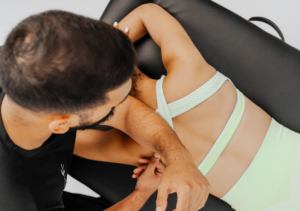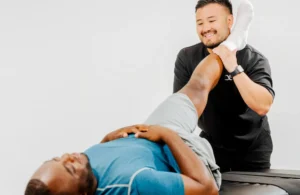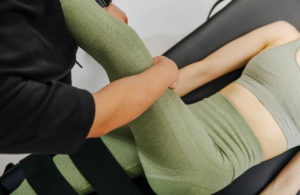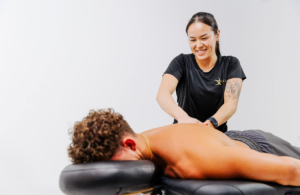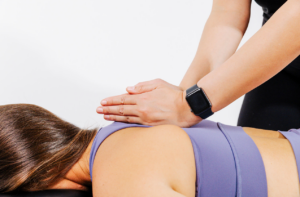
A rehab massage therapist applies clinical massage techniques within a rehabilitation framework to address injury-driven tissue impairment, surgical recovery, and movement dysfunction. Finding one who operates within an integrated clinical environment, rather than a standalone massage practice, significantly improves the quality and completeness of your recovery.
The Distinction That Changes Your Recovery
Not all registered massage therapists operate in the same clinical context. A rehab massage therapist works specifically within a rehabilitation framework where treatment decisions are tied to defined recovery goals, staged according to healing timelines, and coordinated with other health disciplines when the complexity of the condition requires it.
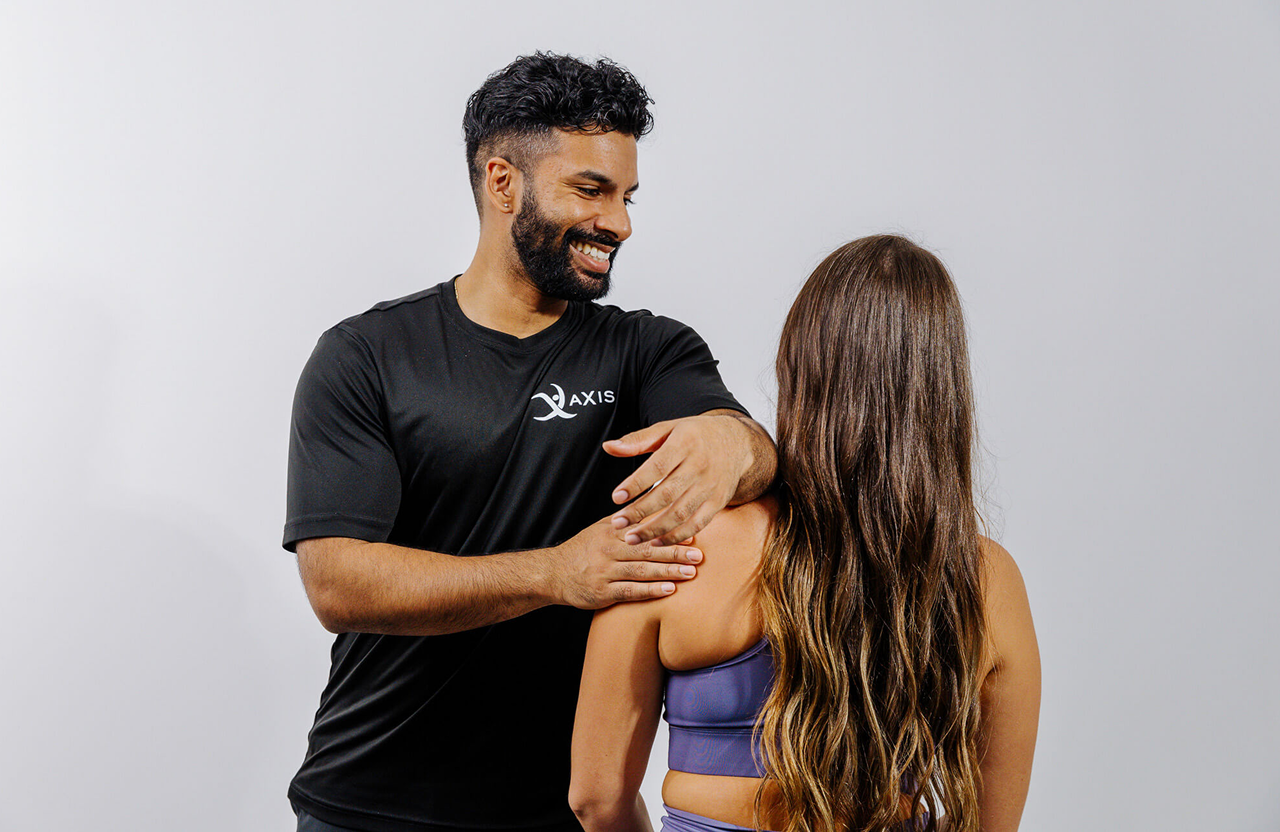
At Axis Therapy and Performance in Toronto, every registered massage therapist is trained in rehabilitation-focused application of manual therapy. This is not a specialty that only some therapists hold. It is built into the clinical standard that defines how every Axis Therapy RMT approaches every session.
What Qualifies a Rehab Massage Therapist?
CMTO Registration
The baseline qualification for any massage therapist in Ontario is registration with the College of Massage Therapists of Ontario. Registration confirms that the therapist has completed an accredited education program and passed clinical competency examinations. It is a non-negotiable starting point when evaluating any provider.
Clinical Assessment Skills
A rehab massage therapist conducts a structured assessment before every first session. This includes a detailed health history intake, identification of the injury mechanism, understanding of the current healing phase, and a physical screen of relevant tissue and movement quality. Therapists who skip assessment in favor of immediate hands-on work cannot deliver genuinely rehabilitation-focused care.
Knowledge of Healing Timelines
Applying the wrong technique at the wrong stage of healing can delay or disrupt recovery. A rehab massage therapist understands the biology of soft tissue healing, the characteristics of each phase, and how to calibrate technique selection and pressure to match what the tissue is capable of tolerating and benefiting from at each stage.
Integration with Other Disciplines
Conditions that often benefit from rehabilitation-focused massage, such as post-surgical recovery, sports injuries, motor vehicle accident injuries, and significant overuse conditions, typically require a multidisciplinary approach. A massage therapist working without coordination with physiotherapists or physicians may not address all aspects of recovery. In a collaborative setting, massage therapists work alongside physiotherapy and chiropractic teams within the same clinic to support comprehensive rehabilitation.
Outcome-Oriented Clinical Accountability
A rehab massage therapist tracks progress between sessions and adjusts the treatment approach when the expected trajectory is not being met. Treatment is not a fixed protocol applied uniformly. It is a responsive process that adapts to how your tissue and function are evolving.
The Axis Therapy RMT Training Standard
Every registered massage therapist at Axis Therapy and Performance completes a three-month in-house training program before seeing clients independently.
This program builds:
- Advanced manual assessment skills beyond basic CMTO registration level
- Clinical reasoning frameworks for injury presentations and rehabilitation contexts
- Technique proficiency in deep tissue, myofascial release, trigger point, and cross-fiber friction methods
- Communication and documentation standards consistent with a multi-disciplinary clinical environment
- Understanding of how massage therapy integrates with physiotherapy exercise prescription and chiropractic joint treatment
This training standard applies across every Axis Therapy location in the GTA. When you book with an Axis Therapy RMT, you are not taking a chance on the individual therapist’s self-directed learning. You are accessing a clinic-wide standard of clinical care.
Conditions Treated by Rehab Massage Therapists at Axis Therapy
- Muscle tears and strains from sports, training, or acute incidents
- Post-surgical recovery from knee, shoulder, hip, and spinal procedures
- Whiplash and soft tissue injuries from motor vehicle accidents
- Chronic overuse injuries in tendons and surrounding musculature
- Lower back pain with associated muscle guarding and restricted spinal mobility
- Frozen shoulder in the rehabilitation phase
- Post-fracture rehabilitation following cast removal
- Repetitive strain injuries from occupational or athletic demands
How to Find the Right Rehab Massage Therapist in Toronto
When evaluating a provider, consider these questions:
- Is the therapist registered with the College of Massage Therapists of Ontario (CMTO) with verifiable active status?
- Does the clinic perform a structured intake and assessment before the first session?
- Does the therapist work within a multidisciplinary environment or as a standalone practitioner?
- Does the clinic monitor treatment progress and adjust the approach across sessions?
- Is direct billing available for extended health benefits?
Clinics that meet these criteria offer coordinated, evidence-informed care across multiple locations in Toronto and the Greater Toronto Area.
Your Recovery Deserves a Clinically Accountable Therapist
The quality of your rehab massage therapist directly shapes the quality and speed of your recovery. At Axis Therapy and Performance, we have built a clinical standard that removes the variability from that equation. Expert technique, structured assessment, and genuine integration with the broader care team are not aspirational goals. They are the standard.
Frequently Asked Questions
1.What is the difference between a rehab massage therapist and a general RMT?
All rehab massage therapists are registered massage therapists, but not all RMTs operate in a rehabilitation framework. The difference lies in clinical training depth, assessment process, understanding of injury healing timelines, and integration with other healthcare disciplines. Axis Therapy RMTs are trained specifically in clinical rehabilitation applications.
2.Can a rehab massage therapist treat post-surgical recovery?
Yes, with appropriate staging. The approach must be aligned with the surgical procedure, the healing phase, and any restrictions provided by the surgeon or physiotherapist. At Axis Therapy, our RMTs work directly with the physiotherapy team to coordinate post-surgical massage within the broader rehabilitation program.
3.How do I know if I need a rehab massage therapist or a physiotherapist?
Many injury presentations benefit from both. Physiotherapy addresses movement mechanics, loading progressions, and structural rehabilitation. Massage therapy addresses the tissue quality and restriction patterns that limit function and response to physiotherapy. At Axis Therapy, both disciplines are available under one roof and our team will guide you toward the right starting point.
4.Are rehab massage sessions longer than standard sessions?
Not necessarily. Session length depends on the complexity and scope of the condition. Most rehab massage sessions run 60 to 75 minutes to allow adequate time for assessment, targeted treatment, and post-session communication. Multi-region presentations may warrant 90-minute sessions.
5.Does Axis Therapy offer direct billing for rehab massage?
Yes. Axis Therapy provides direct billing for most major extended health benefit providers in Ontario. Book your appointment online to confirm your plan coverage before your first session.
Access Expert Rehab Massage at Axis Therapy Toronto
Recovery is a clinical process. The therapist guiding your manual therapy component should bring the training, accountability, and clinical integration that rehabilitation demands. At Axis Therapy and Performance, every registered massage therapist does. Book your rehab massage appointment today and start working with a therapist who is as invested in your outcome as you are.
Key Takeaways
- Rehab massage therapists apply clinical massage within a structured rehabilitation framework. They help address injuries, post-surgical recovery, and movement dysfunction.
- Treatment is guided by defined recovery goals and healing timelines. Techniques are adapted to the tissue’s capacity at each stage of healing.
- Key qualifications include CMTO registration, clinical assessment skills, and knowledge of soft tissue healing biology. Therapists also work in collaboration with physiotherapy and chiropractic teams for integrated care.
- Axis Therapy RMTs complete a three-month in-house training program. This builds advanced assessment skills, proficiency in rehabilitation-focused techniques, and multidisciplinary communication standards.
- The clinic model is integrated for coordinated care. Massage therapy is combined with physiotherapy and chiropractic for comprehensive rehabilitation.