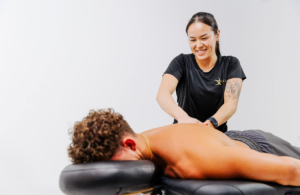
Deep tissue massage with the elbow allows a therapist to apply sustained, concentrated pressure to the densest and most restricted muscle groups in the body. It is a clinical technique used when thumbs and hands cannot generate sufficient depth or maintain adequate pressure through prolonged treatment of large muscle masses.
Why Therapists Use the Elbow in Deep Tissue Work
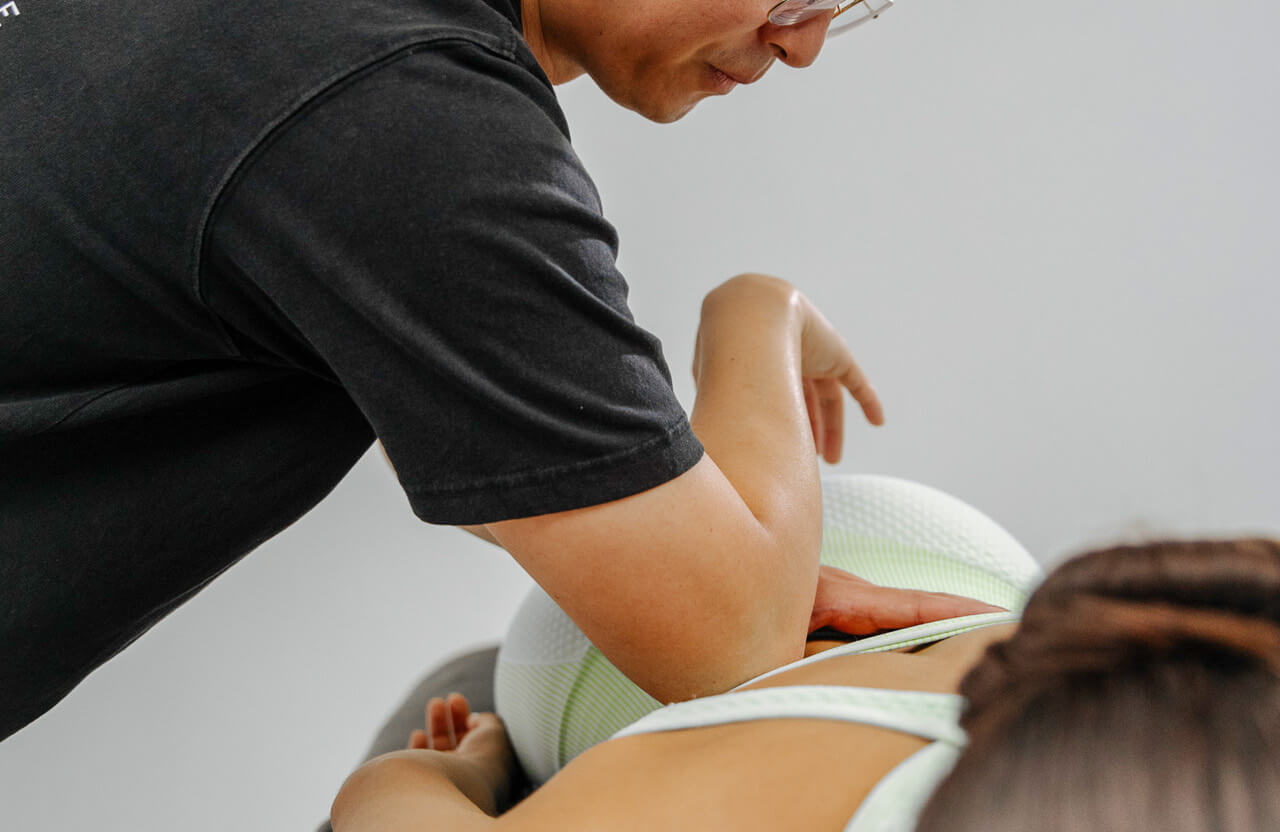
When most people picture a massage therapist at work, they imagine hands gliding over muscle. For deep tissue massage, that picture is only partially accurate. Accessing the deeper layers of large muscle groups, such as the gluteus maximus, thoracic erectors, hamstrings, or calves, requires a tool capable of generating and sustaining significant mechanical force across a small surface area. The olecranon, the bony point of the elbow, is the most effective tool available for this work.
At Axis Therapy and Performance in Toronto, our registered massage therapists are trained in the precise application of elbow technique as part of a comprehensive deep tissue massage approach. It is not a shortcut or a brute-force method. Used correctly, elbow technique allows the therapist to work with significantly less physical strain while delivering more targeted, effective pressure to the structures that need it most.
The Biomechanics of Elbow Technique
The elbow provides several mechanical advantages over thumb or palm-based pressure:
Concentrated Contact Area
The olecranon presents a small, firm contact surface that concentrates force over a precise point. This allows the therapist to target a specific structure within a dense muscle mass without dispersing pressure across the surrounding tissue.
Sustained Force Without Therapist Fatigue
Generating deep pressure with thumbs or knuckles for extended periods creates significant strain on the therapist’s hands and wrists. Elbow technique redistributes this load through the larger joints of the arm and shoulder, allowing the therapist to maintain consistent depth over longer periods without compromising technique quality.
Perpendicular and Longitudinal Application
The elbow can be applied both perpendicular to the muscle fiber (transverse work for adhesion release) and parallel to it (longitudinal stripping for fiber-direction release). This versatility makes it applicable across a range of tissue conditions and treatment goals.
Muscle Groups Most Commonly Treated with Elbow Technique
Gluteus Maximus and Medius
The gluteal muscles are among the densest and most commonly restricted structures in the body, especially in athletes, runners, and individuals who spend long periods sitting. Elbow techniques are particularly effective for reaching the deep fibers of the gluteal complex and releasing trigger points that contribute to hip pain, buttock discomfort, and sciatic nerve referral. Addressing these restrictions can help reduce pain and improve overall hip and lower back function.
Thoracic Erector Spinae
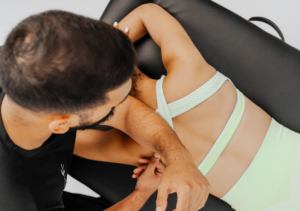
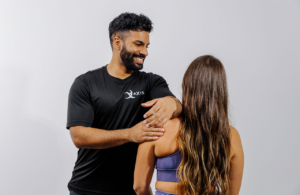
The erector muscles alongside the thoracic spine are another area where elbow techniques are particularly effective. Longitudinal stripping along the erector column can help release dense restrictions that limit spinal extension and contribute to chronic upper and mid-back discomfort. Integrating these techniques with targeted care supports improved mobility and reduced pain in the thoracic region.
Hamstrings
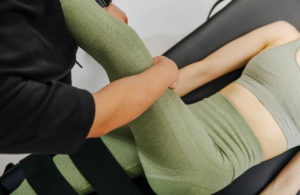
The posterior thigh muscles, especially in athletes with high training volumes, often develop dense restrictions that can be difficult to release with hand-based techniques alone. Elbow techniques can target deeper structures, such as the biceps femoris and semimembranosus, with a level of precision that is difficult to achieve using thumbs alone. Addressing these restrictions supports recovery and helps maintain optimal performance in the posterior chain.
Calves and Soleus
The soleus sits deep to the gastrocnemius and is a primary contributor to calf tightness, Achilles tendon overload, and plantar fasciitis. Elbow technique applied to the posterior calf reaches the soleus effectively, particularly in clients with significant muscle mass.Addressing restriction in this muscle is important for improving calf flexibility and supporting healthy running mechanics.
Quadratus Lumborum
The QL, sitting between the posterior iliac crest and the lower ribs, is one of the most common sources of lateral lower back pain. It is also one of the most difficult structures to access with standard hand technique. Elbow work in the appropriate side-lying position allows the therapist to target the QL precisely.
What Elbow Technique Feels Like as a Client
The first time a therapist transitions to elbow technique, the change in pressure is immediately noticeable. The contact area is smaller and the force is more concentrated than hand-based work. The sensation is deeper and more specific.
This should always feel productive, penetrating pressure rather than sharp pain. A well-trained therapist applies elbow technique with precise body positioning and controlled weight transfer, not blunt force. Communication throughout the session is standard practice at Axis Therapy. If the pressure exceeds your tolerance or produces sharp radiating pain, always communicate this immediately.
Your therapist will also use elbow technique selectively, transitioning between hands, forearms, and elbows based on the specific structure being addressed and how your tissue responds. It is not applied indiscriminately across the whole body.
Is Elbow Technique Safe?
When performed by a trained registered massage therapist, elbow technique is safe and highly effective, several precautions apply:
- Elbow technique is avoided directly over bony prominences, joints, and superficial nerves
- It is not used over acutely inflamed tissue or areas with active infection
- Pressure is always calibrated to the individual’s tolerance and tissue condition
- Clients with osteoporosis, skin conditions, or recent fractures require modified or alternative approaches
At Axis Therapy Toronto, each session begins with an intake process that screens for contraindications. Elbow techniques are introduced progressively based on tissue response and individual comfort. Clear communication during intake helps ensure that treatment is appropriate and that expectations for a first deep tissue session are well understood.
The Role of Elbow Technique in a Comprehensive Treatment Session
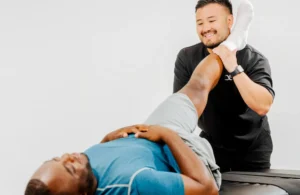
Elbow technique is one component of a full deep tissue massage session, not a standalone treatment. Sessions at Axis Therapy begin with lighter effleurage to warm superficial tissue before progressing to deeper work. Elbow technique is integrated where the clinical need requires it, complemented by forearm work, hand-based stripping, and myofascial release depending on the structures involved. Our fascial stretch therapy service complements deep tissue elbow work by addressing fascial restrictions across the broader kinetic chain through assisted stretching techniques.
For athletes and active individuals, elbow-based deep tissue work combined with a physiotherapy-led strength and rehabilitation program can support durable outcomes. Manual therapy helps restore tissue quality, while rehabilitation focuses on addressing underlying movement patterns that contribute to restriction. This integrated approach connects hands-on care with the active rehabilitation phase of recovery and supports overall performance and resilience.
Experience the Difference Skilled Technique Makes
The difference between a deep tissue massage that produces lasting change and one that simply provides temporary relief often comes down to technique precision and clinical intention. At Axis Therapy and Performance, our therapists bring both. Book your deep tissue massage session in Toronto today and experience what expert tissue work actually feels like.
Frequently Asked Questions
1. Is deep tissue massage with the elbow more effective than with hands?
For large, dense muscle groups such as the glutes, hamstrings, and thoracic erectors, elbow technique generates more sustained, penetrating pressure than hand-based work. For more delicate areas or superficial tissue work, hands and forearms remain the appropriate tools. Technique selection always follows clinical need.
2. Does elbow technique cause bruising?
Bruising from elbow technique is uncommon when applied correctly. Excessive pressure, poor body mechanics, or application over superficial vasculature can occasionally cause minor bruising. A skilled therapist calibrates pressure to the individual’s tissue tolerance and avoids areas where bruising risk is elevated.
3. Can I request elbow technique at Axis Therapy?
Yes. When booking your session, note your preference or describe the condition you want addressed. Your therapist will incorporate elbow technique where clinically appropriate based on your tissue assessment.
4. How is elbow technique different from trigger point therapy?
Trigger point therapy applies sustained ischemic pressure specifically to trigger points within a muscle to reduce their activity. Elbow technique is a broader tool used for both trigger point work and longitudinal fiber stripping, adhesion release, and general deep tissue engagement. The two approaches overlap and are often used together within the same session.
5. Is deep tissue massage with elbow technique appropriate for my first session?
Your therapist will begin with lighter work to assess your tissue tolerance before introducing elbow technique. First sessions typically involve more evaluation and lighter-to-moderate pressure across the relevant structures. Deeper elbow work is introduced progressively as the therapist understands how your tissue responds.
Targeted Technique. Measurable Results. Book at Axis Therapy
Elbow technique in the hands of a skilled registered massage therapist is one of the most effective tools available for addressing the dense tissue restriction driving chronic musculoskeletal pain. At Axis Therapy and Performance, this technique is applied with clinical precision within a fully integrated care environment. Book your appointment at Axis Therapy Toronto today and experience deep tissue work that reaches where you actually need it. Visit our locations page to find the Axis Therapy clinic most convenient for you.
Key Takeaways
- Elbow technique concentrates force over a small contact area, allowing precise access to dense, restricted muscle groups that hand-based techniques cannot effectively reach.
- The olecranon is most commonly used on the glutes, thoracic erectors, hamstrings, soleus, and quadratus lumborum.
- Productive pressure during elbow technique should never feel sharp or radiating. Communication with your therapist throughout the session is standard practice.
- Elbow technique is integrated within a full deep tissue session alongside forearm work, hand-based stripping, and myofascial release based on clinical need.
- Axis Therapy Toronto therapists are trained in precise elbow application as part of a comprehensive deep tissue skill set.