Massage for a muscle tear is highly effective when timed to the appropriate stage of healing. Applying it too early can disrupt the repair process. Applied correctly from the sub-acute phase onward, massage reduces scar tissue formation, restores tissue extensibility, and supports the return to full function significantly faster than rest alone.
Understanding Muscle Tears and the Healing Process
A muscle tear, also called a muscle strain, occurs when muscle fibers are overstretched or forced to contract too forcefully, causing partial or complete disruption of the fiber architecture. Tears range in severity from Grade I, involving microscopic fiber damage, to Grade III, involving complete rupture of the muscle belly. Massage for muscle tear recovery is appropriate across all grades, with the approach calibrated precisely to the stage and severity of the injury.
At Axis Therapy and Performance in Toronto, muscle tears are a common sports- and activity-related condition addressed through both massage therapy and physiotherapy programs. Understanding the healing timeline is essential for providing care that supports recovery effectively. The physiotherapy team takes a structured approach to muscle tear rehabilitation, tailored to the stage of healing and individual needs at each clinic location, including Toronto, Mississauga, and Markham.
The Three Phases of Muscle Tear Healing
Phase 1: Inflammatory Phase (Days 1 to 5)
Immediately following a muscle tear, the body initiates an inflammatory response. Blood flow increases to the area, immune cells clear cellular debris, and the initial scaffolding for repair is laid down. This phase is characterized by pain, swelling, warmth, and reduced function.
Deep tissue massage is contraindicated during this phase. Applying mechanical pressure to acutely inflamed tissue can disrupt vascular structures, increase bleeding within the tissue, and prolong inflammation. The most appropriate response is PEACE and LOVE protocol, protection, elevation, avoidance of anti-inflammatories in the first 48 hours, compression, education, load management, optimism, vascularization, and exercise.
Phase 2: Proliferative Phase (Days 5 to 21)
As inflammation subsides, fibroblasts begin depositing collagen to repair the torn fibers. The new collagen initially lacks the organized architecture of the original tissue and is more disorganized and adhesive. This is when appropriate massage therapy intervention begins to play a meaningful role in shaping how that collagen is laid down.
During the proliferative phase, lighter massage techniques such as effleurage, gentle cross-fiber friction, and lymphatic drainage help improve circulation, reduce secondary tissue restrictions, and guide the alignment of collagen fibers. The aim is to encourage organized, flexible scar tissue rather than dense, matted adhesions. Supporting tissue recovery between treatment sessions during this phase can help optimize healing and reduce muscle soreness.
Phase 3: Remodeling Phase (Day 21 to 12 Months)
Collagen remodeling can continue for up to a year following a significant muscle tear. During this phase, the repair tissue progressively takes on more of the characteristics of the original muscle fiber architecture, though it rarely achieves identical quality without appropriate intervention.
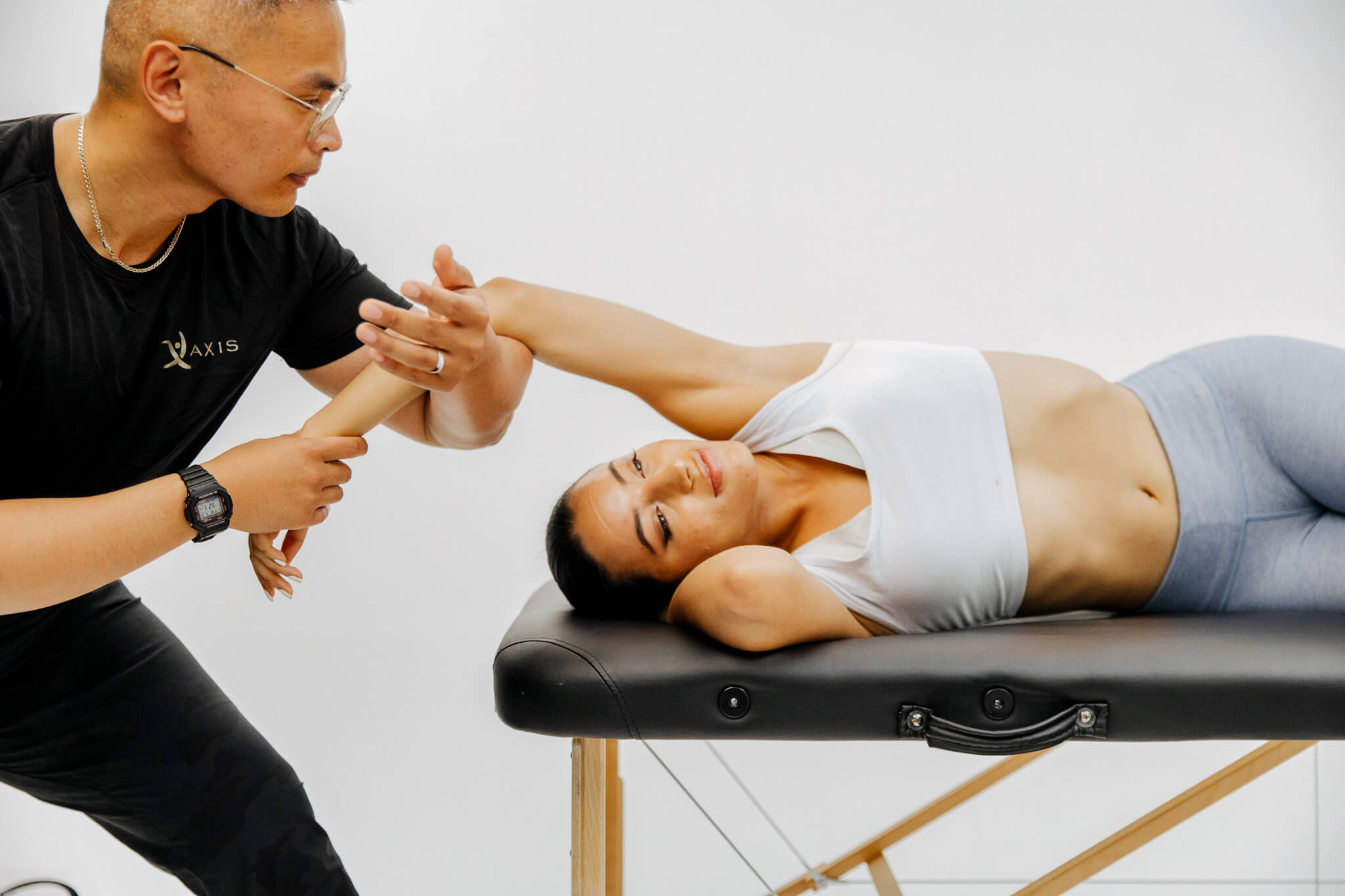
Deep tissue massage becomes fully appropriate during the remodeling phase. Cross-fiber friction techniques, longitudinal stripping, and myofascial release work directly on the developing scar tissue to maintain extensibility, prevent adhesion formation between the repair tissue and surrounding structures, and restore the mobility needed for return to full activity. Our fascial stretch therapy service complements this phase of recovery by addressing fascial restrictions across the broader kinetic chain through assisted stretching techniques.
Specific Massage Techniques for Muscle Tear Recovery
Cross-Fiber Friction
Applied perpendicular to the direction of the muscle fibers, cross-fiber friction breaks down collagen adhesions that develop during scar formation. It promotes the reorientation of new collagen fibers along functional lines of stress, producing more extensible and durable repair tissue.
Myofascial Release
The fascial restriction that develops around a muscle tear site extends into the surrounding connective tissue matrix. Myofascial release techniques address this broader restriction pattern and prevent the formation of the dense fascial adhesions that limit joint range of motion and predispose the area to re-injury. Our fascial stretch therapy service can complement myofascial release work by addressing fascial restrictions across the full limb chain during the remodeling phase.
Longitudinal Stripping
Longitudinal stripping applies sustained pressure along the direction of the muscle fibers to restore fiber-direction mobility and reduce the hypertonic compensation pattern that typically develops in the muscles surrounding the tear site.
Trigger Point Release
Compensatory loading during the injury period often leads to active trigger points in muscles surrounding the tear. Addressing these trigger points during massage can reduce overall pain and help restore normal movement coordination in the affected area. Trigger point therapy, combined with sports-specific massage techniques, plays an important role in supporting recovery from athletic injuries.
When to Start Massage After a Muscle Tear
Timing is the most important variable in massage therapy for muscle tears:
- Grade I tears: Gentle massage can begin as early as day 5 to 7 when acute inflammation has settled
- Grade II tears: Sub-acute massage is typically appropriate from day 7 to 14 depending on symptom presentation
- Grade III tears: Post-surgical or significant complete tears require physiotherapy clearance before massage begins, typically from week 3 to 6
Your registered massage therapist at Axis Therapy will assess the current state of your injury at intake and advise on appropriate timing. Never assume you are past the inflammatory phase based on calendar days alone. Tissue response is the more reliable guide.
Combining Massage with Physiotherapy for Muscle Tear Recovery
Massage therapy addresses the tissue quality side of muscle tear recovery. Physiotherapy at Axis Therapy addresses the movement, loading, and strength side. Combined, the two produce faster and more complete recovery than either achieves alone.
The physiotherapy program will typically include progressive loading of the healing tissue, eccentric strengthening to restore fiber resilience, and return-to-sport or return-to-activity planning. The massage therapy component maintains tissue extensibility, prevents adhesion formation, and manages the compensatory tension patterns that develop in adjacent structures.
At Axis Therapy, massage therapists and physiotherapists work within the same clinic environment, allowing coordinated care. This integration enables massage therapists to tailor their treatment to the specific stage of the physiotherapy program. The collaborative approach supports a structured transition from injury management to full performance, with progressive strength work complementing hands-on care during the remodeling phase.
Common Muscle Tear Locations Treated at Axis Therapy
- Hamstring strains are among the most common injuries in sprinting and kicking sports. Physiotherapy for runners focuses on managing hamstring and lower limb tears, with rehabilitation programs tailored to the specific demands of running and athletic performance.
- Hip flexor tears in runners, cyclists, and field sport athletes
- Quadriceps strains, often resulting from explosive deceleration or contact, can contribute to knee pain. Rehabilitation addresses both the muscle tear and its impact on knee function, with programs designed to support recovery of the quadriceps and anterior thigh while managing associated knee symptoms.
- Calf muscle tears, particularly the gastrocnemius medial head
- Rotator cuff muscle tears are often managed with conservative rehabilitation protocols. Multidisciplinary care focuses on restoring shoulder strength, mobility, and function while supporting tissue healing throughout the recovery process.
- Pectoral and shoulder girdle tears following heavy resistance training
Recovery That Goes Beyond the Injury Site
A muscle tear affects more than the injured fibers. It can alter movement patterns, increase stress on adjacent structures, and create compensations that may persist long after the injury has healed. Comprehensive rehabilitation addresses both the primary injury and these secondary effects, with coordinated care across disciplines supporting a full and lasting recovery.
Frequently Asked Questions
1. Can massage make a muscle tear worse?
Yes, if applied during the acute inflammatory phase. Deep pressure over actively inflamed, bleeding tissue can increase damage and prolong healing. Massage should not be applied to a fresh muscle tear until acute inflammation has resolved, typically five to seven days for Grade I injuries and longer for more severe tears..
2. How soon can I return to sport after a muscle tear with massage therapy?
Return-to-sport timelines depend on grade of injury, sport demands, and individual healing response. Grade I hamstring strains may resolve in two to four weeks with appropriate management. Grade II injuries typically require six to twelve weeks. Massage therapy, combined with physiotherapy, is associated with faster return timelines compared to rest alone.
3. What is the difference between a muscle tear and a muscle strain?
The terms are used interchangeably in clinical practice. Both describe disruption of muscle fiber integrity ranging from microscopic micro-tears to complete rupture. Grade I is a strain or mild tear, Grade II is a partial tear, and Grade III is a complete rupture.
4. Should I get an MRI before starting massage therapy for a muscle tear?
For Grade I and most Grade II injuries, imaging is not required before beginning massage therapy. Your therapist will assess the injury clinically at intake. For suspected Grade III tears or injuries with atypical presentation, imaging may be recommended by your physiotherapist or physician before manual therapy begins.
5. Does Axis Therapy treat muscle tears alongside physiotherapy in the same clinic?
Yes. Axis Therapy and Performance is a fully integrated multi-disciplinary clinic. Your massage therapist and physiotherapist work in the same environment and communicate directly about your treatment plan.
Recover Fully. Return to Function. Book at Axis Therapy.
Muscle tears are recoverable injuries that respond well to skilled, stage-appropriate manual therapy and progressive rehabilitation. At Axis Therapy and Performance, we deliver both. Our registered massage therapists and physiotherapists work together to guide your tissue through every phase of healing toward complete, durable recovery. Book your appointment at Axis Therapy Toronto today and start the most direct path back to full function. Visit our locations page to find the Axis Therapy clinic most convenient for you.
Key Takeaways
- Massage for muscle tear is contraindicated during the acute inflammatory phase (Days 1 to 5). Appropriate timing begins from the sub-acute phase onward.
- Cross-fiber friction, longitudinal stripping, myofascial release, and trigger point work are the primary techniques used at each stage of healing.
- The combination of massage therapy and physiotherapy-led progressive loading produces faster, more complete recovery than either alone.
- Grade I tears can begin gentle massage as early as Day 5 to 7. Grade II and III injuries require longer timelines and clinical assessment before manual therapy begins.
- Axis Therapy Toronto treats muscle tears within an integrated model connecting registered massage therapists and physiotherapists in the same clinic.