Deep tissue massage for hips targets the dense musculature and connective tissue surrounding the hip joint to reduce pain, release restriction, and restore functional range of motion. It is an effective clinical intervention for hip flexor tightness, glute dysfunction, IT band restriction, and chronic hip pain that has not responded to stretching alone.
Why Hip Pain Is More Complex Than It Appears
The hip is one of the most mechanically demanding joints in the body. It supports full bodyweight through every step, absorbs load during sport and exercise, and connects the forces generated by the trunk to the lower limbs. When the musculature surrounding the hip becomes restricted, the effects extend well beyond the joint itself. Deep tissue massage for hips addresses this complexity directly, working through the layered musculature to restore tissue quality and joint mobility.
Hip pain is a common issue addressed through massage therapy, physiotherapy, and chiropractic. An integrated approach allows observations from one discipline, such as tissue restrictions identified during massage, to inform and guide the overall rehabilitation plan, creating a more coordinated and effective treatment strategy than single-discipline care.
Key Structures Treated During Hip Deep Tissue Massage
Hip Flexors
The iliopsoas and rectus femoris are key contributors to anterior hip pain and limited hip extension. Prolonged sitting can shorten these muscles and create patterns of overuse that contribute to low back pain, groin tightness, and reduced running efficiency. Deep tissue massage targets the fascial restrictions and muscle hypertonicity in this area, helping to restore proper function and mobility. Hip flexor restrictions can significantly affect running mechanics and overall movement efficiency.
Gluteal Muscles
The gluteus maximus, medius, and minimus form the posterior and lateral walls of the hip. When these muscles are restricted or develop active trigger points, they can refer to pain in the buttock, hip joint, and sometimes down the posterior thigh, often mimicking sciatic nerve pain. Addressing restrictions in the glutes is a central component of a deep tissue hip session, as it can significantly reduce pain and improve hip function.
IT Band and TFL
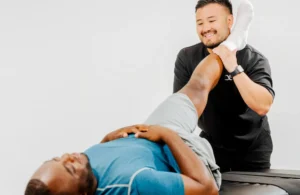
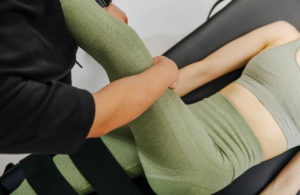
The iliotibial (IT) band is a thick fascial structure extending from the tensor fascia latae at the hip crest to the lateral knee. Restrictions in the TFL and IT band complex can cause lateral hip pain, contribute to knee tracking issues, and limit hip internal rotation. Myofascial and deep tissue techniques focused on the TFL and proximal IT band are key components of hip treatment. Assisted fascial stretching can further address these restrictions by mobilizing the full lower limb chain and improving overall tissue flexibility.
Adductors
The adductor group on the medial thigh plays a significant role in hip stability and pelvic control. Restriction here often goes unaddressed in standard hip treatment but contributes meaningfully to groin pain, hip impingement symptoms, and altered movement patterns during walking and running.
Deep External Rotators
The piriformis and the five smaller deep external rotators sit beneath the gluteal mass and are a common source of deep hip and buttock pain. Deep tissue work targeting these structures is a critical component of treating conditions such as piriformis syndrome and deep hip rotator restriction.
Conditions That Deep Tissue Hip Massage Addresses
- Hip flexor tightness and anterior hip impingement
- Gluteal muscle strain and chronic buttock pain
- IT band syndrome and lateral hip pain
- Piriformis syndrome and sciatic-like referral patterns – visit our chiropractic for sciatica nerve pain Toronto page for additional guidance on managing piriformis and sciatic referral conditions at Axis Therapy
- Greater trochanteric pain syndrome
- Hip osteoarthritis with surrounding muscle guarding
- Post-surgical hip rehabilitation alongside physiotherapy
What to Expect During a Deep Tissue Hip Massage
Your therapist begins with a movement screen and postural assessment to identify the dominant restriction patterns before treatment starts. This shapes the direction of the session and ensures the work addresses the actual source of your symptoms. Visit our therapists page to meet the registered massage therapists who conduct these assessments at every Axis Therapy location.
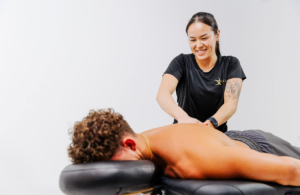
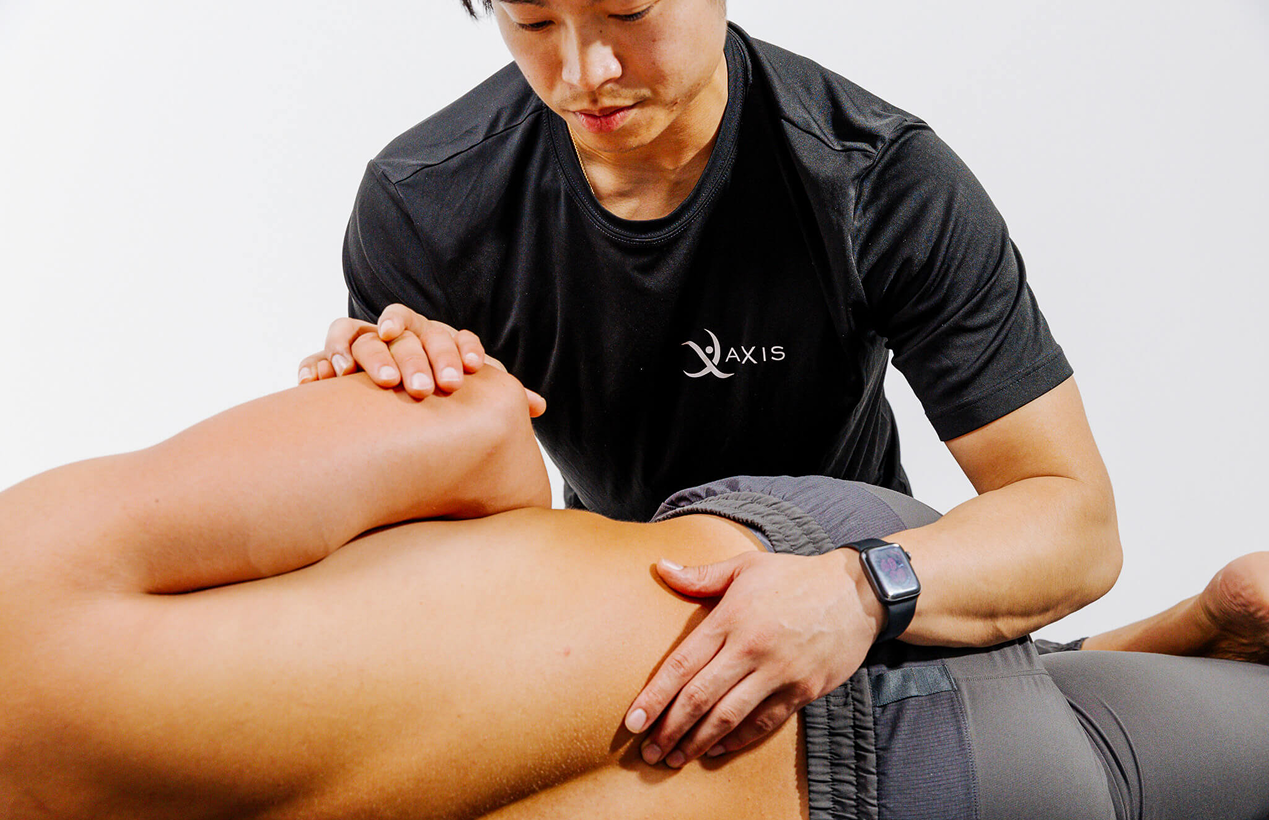
Treatment typically covers the anterior, posterior, and lateral hip in sequence. The therapist works through superficial tissue before applying sustained, directed pressure to deeper structures. You should expect productive pressure throughout, with brief moments of referral sensation as trigger points are engaged. Communication throughout the session allows the therapist to calibrate depth and direction appropriately.
Many clients combine deep tissue hip massage with active rehabilitation exercises that target hip strength and motor control. This integrated approach addresses both tissue quality and the underlying movement dysfunction, supporting more effective recovery and improved functional performance.
How Hip Massage Supports Athletic Performance
For athletes and active individuals, hip restriction is a performance limiter as much as a pain source. Limited hip extension reduces running stride length. Restricted internal rotation affects agility and change of direction. Tight hip flexors alter trunk control and load transfer through the spine.
Sports performance and rehabilitation programs often integrate deep tissue hip massage with strength training, movement correction, and return-to-sport planning. Hip mobility is addressed as part of the full kinetic chain rather than in isolation, ensuring that restrictions are considered in the context of overall movement patterns. For runners, evaluating hip mechanics alongside broader training factors helps identify loading patterns and optimize functional performance.
When to Seek Professional Treatment for Hip Pain
Hip pain that lasts more than two to three weeks, interferes with walking or exercise, or disrupts sleep should be evaluated clinically. While self-stretching and foam rolling can offer temporary relief, they typically do not address the underlying tissue restrictions contributing to the discomfort. Techniques to support tissue recovery between sessions can help reduce muscle soreness and promote a more effective recovery process.
A deep tissue massage assessment can help identify the factors contributing to hip pain. If additional care is needed, physiotherapy and chiropractic services can be combined to address the condition. A coordinated approach can be especially effective for hip and lower limb sports injuries.
Expert Hip Care in One Integrated Clinic
Hip pain can respond effectively to targeted manual therapy when combined with an appropriate rehabilitation plan. Integrating massage therapy, physiotherapy, and chiropractic care provides a comprehensive approach that addresses the underlying factors contributing to hip discomfort. Coordinated care can support more efficient recovery and improved long-term function.
Frequently Asked Questions
1. How many sessions of deep tissue massage are needed for hip pain?
Most clients with moderate hip restriction notice meaningful improvement within four to six sessions. Chronic or complex hip conditions, particularly those involving multiple contributing structures, require a longer treatment series coordinated with active rehabilitation.
2. Can deep tissue hip massage help with hip impingement?
Deep tissue massage addresses the muscular and fascial restrictions that aggravate hip impingement symptoms. It does not treat the bony structural changes associated with femoroacetabular impingement (FAI) directly. For FAI, massage therapy works best alongside physiotherapy-led load management and movement correction.
3. Is it normal to feel soreness after a deep tissue hip massage?
Mild muscle soreness lasting 24 to 48 hours after a session is common, especially in the gluteal and hip flexor areas. This is a normal response of the tissues to exercise or therapy and usually resolves on its own. Persistent or sharp pain should be discussed with a therapist. Practical strategies can help manage post-session soreness and support recovery between treatments.
4. Can deep tissue hip massage help sciatica?
True sciatica involves compression of the sciatic nerve in the lumbar spine and typically requires physiotherapy-led management. Many cases described as sciatica, however, are actually related to trigger points in the gluteal or piriformis muscles, which can refer pain down the leg without true nerve compression. Deep tissue massage can be highly effective for managing these referred pain patterns. Assessment and treatment approaches vary depending on whether the pain is nerve-related or muscle-related.
5. Do I need a referral to book hip massage therapy at Axis Therapy?
No referral is required. Book your appointment directly online or call (416) 856-3073. Our front desk team will help match you with the right therapist for your presentation.
Take the First Step Toward Unrestricted Hip Movement
Hip restriction does not have to define your movement or limit your quality of life. Deep tissue massage, delivered with clinical precision and integrated with a rehabilitation plan, produces lasting results for even long-standing hip conditions. Book your deep tissue hip massage in Toronto today and start rebuilding the mobility and strength your hips were built for.
Key Takeaways
- Deep tissue hip massage addresses hip flexors, glutes, IT band, adductors, and deep rotators in a structured, assessment-led session.
- Hip restriction drives both pain and performance limitations across the lower limb and trunk.
- Most clients see meaningful improvement within four to six sessions when combined with active rehabilitation.
- Axis Therapy Toronto integrates massage therapy, physiotherapy, and chiropractic care for comprehensive hip condition management.
- No referral is needed to book. Multiple GTA clinic locations are available.