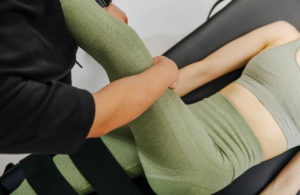

Deep tissue massage and myofascial release are both hands-on manual therapy techniques, but they work on different structures through different mechanisms. Knowing which approach matches your condition helps you recover faster, communicate more clearly with your therapist, and get the most from every session.
Two Techniques Worth Understanding
When clients at Axis Therapy and Performance ask about deep tissue massage vs myofascial release, the question usually comes from a practical place: they want to know which one will help them most. The answer depends on the nature of your pain, the structures involved, and how your tissue has responded to previous treatment.
Both techniques are delivered by registered massage therapists and are covered under most extended health benefit plans in Ontario. Both address restrictions beneath the surface of the body. But they take meaningfully different routes to get there. Visit our massage therapy page for a complete overview of the manual therapy approaches our registered therapists use across every Axis Therapy location.
What Deep Tissue Massage Targets
Deep tissue massage works through sequential layers of skeletal muscle using sustained, directional pressure. The therapist applies force through thumbs, forearms, and elbows to access the deeper musculature and the connective tissue layers surrounding it. The primary intent is mechanical: breaking down adhesions, releasing hypertonic muscle fibers, improving local circulation, and reducing the overload on sensitized neural structures.
The technique is best suited for conditions with a clear muscular component: chronic lower back pain, neck and shoulder tension, sports muscle injuries, and post-surgical scar tissue. The work is focused, deliberate, and produces noticeable pressure throughout the session. Read our blog post on expert sports massage therapy for recovery to understand how deep tissue massage supports athletic recovery and performance maintenance between training sessions.
What Myofascial Release Targets
Myofascial release works on the fascial system: the continuous, three-dimensional web of connective tissue that surrounds every muscle, bone, nerve, and organ in the body. Fascial restriction does not always announce itself at the site of the restriction. A tight hip flexor attachment can generate pain at the knee. A restricted thoracic fascia can contribute to chronic headaches. Myofascial release follows these tension patterns rather than working on a single localized structure.
The technique applies gentle to moderate sustained pressure, held at restriction points for 90 seconds or longer until the tissue responds and releases. The force is significantly lighter than deep tissue massage, and the session often feels quieter and more still. Myofascial release is particularly effective for diffuse or poorly localized pain, conditions involving the hip and pelvis, postural dysfunction, and clients with heightened pain sensitivity. Our fascial stretch therapy service complements myofascial release by addressing fascial restrictions across the broader kinetic chain through assisted stretching techniques.
Side-by-Side Comparison
Pressure and Force
Deep tissue massage: moderate to heavy, directional pressure applied through specific body parts. Myofascial release: lighter, sustained pressure held without forcing movement through the tissue.
Target Structure
Deep tissue massage: skeletal muscle and its immediate connective tissue envelope. Myofascial release: the broader fascial matrix connecting structures across the entire body.
Geographic Effect
Deep tissue massage produces localized effects in the treated region. Myofascial release can produce effects at a distance from where the therapist is working, reflecting the connected nature of the fascial system.
Session Experience
Deep tissue massage sessions typically involve audible and tactile signs of tissue release. Myofascial release sessions are often quieter, with clients sometimes experiencing warmth, tingling, or emotional responses in areas distant from the treatment site.
Which Conditions Suit Which Technique?
Conditions Better Suited to Deep Tissue Massage
- Specific muscle strains and sports injuries – visit our sports injury physiotherapy Mississauga and Markham sports injury physiotherapy pages for additional context on how deep tissue massage integrates with our physiotherapy approach to athletic injuries
- Lower back pain tied to tight erectors, quadratus lumborum, or thoracolumbar fascia — visit our lower back pain physiotherapy Mississauga and Markham lower back pain physiotherapy pages for a full overview of how we treat lumbar conditions across our clinic network
- Post-surgical scar tissue management – visit our post-surgery physiotherapy Mississauga page for guidance on how massage and physiotherapy coordinate in post-surgical rehabilitation
- Active trigger points within a specific muscle group
- Athletes requiring targeted recovery between training sessions – read our blog post on speeding up recovery and reducing muscle soreness for practical guidance on how deep tissue massage supports the athletic recovery cycle
Conditions Better Suited to Myofascial Release
- Fibromyalgia and widespread chronic pain
- Postural imbalances spanning multiple body regions
- Pain patterns that do not follow standard dermatomal or myotomal maps – our chiropractic for sciatica nerve pain Toronto page provides additional context on how nerve-related and radiating pain patterns are addressed across disciplines at Axis Therapy
- Heightened pain sensitivity or previous intolerance to deep pressure
- Ongoing restrictions following periods of immobilization or prolonged inactivity – visit our post-surgery physiotherapy Mississauga and Markham post-surgery physiotherapy pages for guidance on managing fascial restriction following immobilization
When Both Are Used in the Same Session
In clinical practice, the distinction between deep tissue massage and myofascial release is often less binary than the comparison suggests. Many Axis Therapy registered massage therapists integrate both approaches within a single session: beginning with myofascial release to address broader fascial tension before moving into deep tissue work on specific structures.
This integration is particularly common when treating complex presentations that involve both localized muscle dysfunction and global fascial restriction. It is also a natural fit for conditions that sit at the intersection of both, such as piriformis syndrome, chronic hip pain, or thoracic outlet syndrome. Visit our therapists page to meet the registered massage therapists who deliver this integrated approach across our clinic network.
How Axis Therapy Approaches the Choice
At Axis Therapy and Performance, the choice between techniques is always driven by your clinical presentation, not a default protocol. Your therapist conducts a thorough intake assessment before the first session and adapts the approach based on tissue findings and how you respond across sessions. The collaborative structure of our clinic means that if your condition requires input from physiotherapy or chiropractic care alongside massage therapy, that coordination happens within the same environment. Visit our why choose Axis page to understand how our integrated team model supports more effective outcomes than single-discipline treatment can achieve. Read our blog post on moving from rehab to full performance to understand how hands-on care connects to the active rehabilitation phase of recovery.
Making an Informed Decision About Your Care
Understanding the difference between deep tissue massage vs myofascial release puts you in a better position to communicate your needs and participate meaningfully in your treatment plan. Explore our massage therapy services and full rehabilitation services at Axis Therapy Toronto to see how these techniques fit within a comprehensive care model. Visit our locations page to find the Axis Therapy clinic most convenient for you across the GTA.
Frequently Asked Questions
1. Is myofascial release or deep tissue massage better for chronic pain?
It depends on the nature and location of the chronic pain. Localized, condition-specific pain typically responds better to deep tissue massage. Widespread or poorly mapped chronic pain often responds better to myofascial release. Many clients benefit from both as part of a structured treatment series. Visit our FAQ page for more answers to common questions about treatment selection and what to expect at your first appointment at Axis Therapy.
2. Can I request both techniques in a single session?
Yes. When booking at Axis Therapy, you can describe your condition and goals. Your therapist will determine the most appropriate blend and adjust throughout the session based on tissue response. Visit our locations page to find your nearest clinic and book your appointment.
3. Is myofascial release covered by insurance?
Both techniques are delivered by CMTO-registered massage therapists and are covered under most extended health benefit plans in Ontario as registered massage therapy. Confirm your specific coverage with your benefits provider. Visit our locations page to confirm direct billing availability at your nearest Axis Therapy clinic.
4. How do I know which technique is right for me?
The most reliable answer comes from a clinical assessment. If you are unsure, book a session and describe your symptoms honestly during the intake. Your therapist will identify the appropriate approach. Visit our therapists page to meet the registered massage therapists who conduct intake assessments at every Axis Therapy location.
5. How many sessions does each technique typically require?
Response varies by condition and individual. Deep tissue massage for a specific musculoskeletal injury often shows measurable progress within three to six sessions. Myofascial release for systemic or chronic fascial restriction may require a longer course of treatment. Read our blog post on rebuilding strength with performance coaching for additional context on how extended treatment plans are structured at Axis Therapy.
Start the Right Treatment at Axis Therapy Toronto
Whether your condition calls for the mechanical precision of deep tissue massage or the broader fascial release of myofascial technique, Axis Therapy and Performance has the clinical expertise to match the right approach to your needs. Book your appointment today and take a more informed step toward lasting recovery. Visit our locations page to find the Axis Therapy clinic most convenient for you.
Key Takeaways
- Deep tissue massage targets skeletal muscle with directional pressure. Myofascial release targets the global fascial system with sustained, lighter force.
- Localized, condition-specific pain typically suits deep tissue massage. Diffuse or poorly localized pain often suits myofascial release.
- Both techniques are frequently integrated within the same session for complex presentations.
- The right choice is determined by clinical assessment, not personal preference alone.
- Axis Therapy Toronto therapists are trained in both approaches and integrate them based on individual tissue findings.