
Shoulder pain is rarely just about the shoulder. The rotator cuff, scapula, thoracic spine, and neck all play a role.
Effective shoulder pain physiotherapy in Mississauga combines thorough assessment, hands-on manual therapy, and progressive strengthening to fix the root cause and get you back to full function.
Reaching overhead should not feel like a gamble. But if you are dealing with shoulder pain, every movement becomes a question: can I lift this? Should I push through that? Is it going to get worse?
Maybe it started in the gym. Maybe it crept up slowly after weeks of swimming, throwing, or even just painting a room. Or maybe you woke up one morning and could not raise your arm without pain.
Shoulder pain is one of the trickiest injuries to deal with because the shoulder is one of the most complex joints in your body. But that complexity is exactly why seeing the right physiotherapist in Mississauga makes such a difference.
Research published in the Journal of Orthopaedic and Sports Physical Therapy consistently shows that structured physiotherapy rehabilitation leads to significantly better long-term outcomes for shoulder conditions than passive treatment alone.
The Shoulder Is Built for Movement: Also Its Weakness
Your shoulder is the most mobile joint you have. It can move in virtually every direction, which is amazing for sports, lifting, and daily life. But all that freedom comes at a cost: stability.
Unlike your hip, which is a deep ball-and-socket joint held together by strong ligaments, your shoulder relies heavily on muscles (especially the rotator cuff) and the labrum to stay centred and stable. When those muscles are weak, overloaded, or injured, the joint does not track properly, and pain follows.
This is why shoulder pain is rarely just about the spot that hurts. It is about how the whole shoulder complex is functioning, including the rotator cuff, the scapula (shoulder blade), the thoracic spine, and even the neck.
Common Causes of Shoulder Pain
At Axis Mississauga, here is what we see most often:
Rotator Cuff Issues
The rotator cuff is a group of four muscles that stabilize the shoulder during movement. Strains, tears (partial or full), and tendinopathy are extremely common, especially in athletes who lift overhead or play throwing sports, and in people over 40 whose tendons have accumulated wear over time.
Shoulder Impingement
That pinching sensation when you raise your arm, often between 60 and 120 degrees. Impingement happens when structures in the shoulder get compressed during movement, usually because of rotator cuff weakness, scapular dysfunction, or poor movement patterns.
Frozen Shoulder (Adhesive Capsulitis)
A progressively stiffening shoulder that becomes painful and severely limited in range. This one follows a specific pattern and timeline, and physiotherapy plays a major role in managing it and restoring mobility.
Labral Tears
The labrum is a ring of cartilage that deepens the shoulder socket. Tears can result from acute injuries (falls, dislocations) or repetitive overhead use (swimming, baseball, CrossFit). Symptoms often include clicking, catching, and a feeling of instability.
AC Joint Injuries
That bump on top of your shoulder after a fall or direct hit. Common in hockey, football, and cycling. These respond well to physiotherapy in most cases.
Referred Pain from the Neck
Sometimes shoulder pain is not coming from the shoulder at all. It is being referred from stiff or irritated joints in the cervical spine. That is why a thorough assessment is so important.
How We Treat Shoulder Pain at Axis
Shoulders require patience and precision. Here is our approach at our Mississauga physio clinic:
Comprehensive Assessment
We test your shoulder range of motion, rotator cuff strength, scapular control, thoracic mobility, and neck. We watch how you move, overhead, behind your back, across your body. This tells us where the breakdown is and what is driving your pain.
Manual Therapy
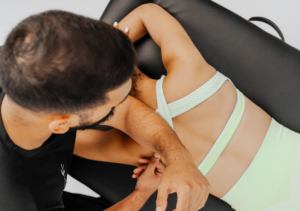
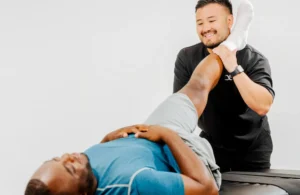
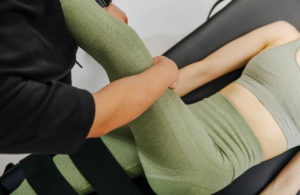
Joint mobilizations to restore movement in the shoulder and thoracic spine. Soft tissue work on tight muscles that are limiting your mechanics. Dry needling to address trigger points. These hands-on techniques reduce pain and set the stage for active rehab.
Progressive Strengthening
This is where the lasting results happen. We build up your rotator cuff, scapular stabilizers, and deltoids in a structured, progressive program. We start where you are, even if that is bodyweight or resistance bands, and build toward the demands of your sport or daily activities.
Movement Retraining
Sometimes the issue is not just weakness. It is how you are moving. We coach better shoulder mechanics during the movements that matter to you, whether that is an overhead press, a swimming stroke, or reaching into a high cupboard.
Gradual Return to Activity
We do not just get you pain-free and send you off. We build you back to the specific activities you want to do, testing your shoulder under increasing load and complexity to make sure it can handle real-world demands.
When to See a Physio for Shoulder Pain
Do not wait until you cannot lift your arm. If your shoulder pain has been present for more than a couple of weeks, if it is waking you up at night, or if it is changing how you train or move, it is time to get it looked at.
Shoulders can get complicated quickly when left untreated. Muscles atrophy, movement patterns compensate, and what started as a minor issue can become a chronic problem. Early intervention keeps things simple and speeds up recovery.
Research published on PubMed supports conservative physiotherapy as an effective first-line approach for rotator cuff issues and shoulder impingement before considering surgical options.
Why Axis Mississauga for Shoulder Rehab?
At our Mississauga clinic (60 Bristol Rd E #604), our therapists deal with shoulders day in and day out. From post-surgical rotator cuff repairs to gym-related impingement to frozen shoulders, we have seen it all and we know how to get results.
Our three-month in-house training program means every therapist has the skills to assess and treat complex shoulder problems. And because we have physiotherapy, chiropractic care, and massage therapy under one roof, we can coordinate your care without you having to manage multiple providers.
We also know that shoulder rehab takes commitment. It is not a one-visit fix. We are upfront about timelines and what the process looks like so you know what to expect and can stay motivated through recovery.
For trusted resources on shoulder health and physiotherapy, the Canadian Physiotherapy Association offers evidence-based patient and clinician guides on musculoskeletal conditions.
Frequently Asked Questions
- How long does it take to recover from a shoulder injury?
Recovery timelines vary widely depending on the diagnosis. Minor impingement or muscle strain can resolve in 4 to 8 weeks. Rotator cuff tears or frozen shoulder may take 3 to 6 months. Your physiotherapist will give you a realistic estimate after your initial assessment, and milestones will be tracked throughout.
- Can physiotherapy help me avoid shoulder surgery?
In many cases, yes. Evidence published on PubMed supports conservative physio management as an effective first-line approach for rotator cuff issues and shoulder impingement before considering surgical options. Your therapist will refer you on if surgery appears necessary.
- Should I rest my shoulder completely during physiotherapy?
Complete rest is rarely the answer and can actually delay recovery. Your physiotherapist will guide you on which activities to modify or avoid while keeping you as active as possible. Movement is medicine, but it has to be the right movement at the right dose.
- What is the difference between shoulder impingement and a rotator cuff tear?
Impingement refers to compression of shoulder structures during movement, often due to muscle imbalances, without actual tissue damage. A rotator cuff tear involves actual disruption of tendon tissue. Both cause pain with overhead activity, but they have different presentations and treatment progressions. A thorough assessment clarifies which is present.
- Can massage therapy help with shoulder pain?
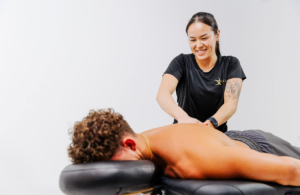
Yes. Massage therapy is a valuable complement to physiotherapy for shoulder conditions. It addresses muscle tension, improves circulation around injured tissues, and reduces pain sensitization. At Axis, our massage therapists and physiotherapists communicate to ensure your care is coordinated and complementary.
Ready to Get Your Shoulder Moving Again?
Shoulder pain that lingers, wakes you up at night, or limits what you can lift or reach is not something to push through and hope resolves on its own. The sooner it is properly assessed, the simpler and faster the recovery.
At Axis Therapy and Performance in Mississauga, our therapists combine hands-on manual therapy with a structured, progressive strengthening program built specifically around your shoulder, your sport, and your daily demands.
Book your appointment at Axis Therapy and Performance and take the first step toward lifting, throwing, and moving with confidence again.
Our Locations
- Scarborough
- Riverdale
- Downtown Toronto
- Mimico
- Mississauga (60 Bristol Rd E #604, Mississauga, ON L4Z 3K8)
- Markham (New Location Coming)
Strong shoulders. Full range. No compromises.
Key Takeaways
- The shoulder is the most mobile joint in the body, and that mobility comes at the cost of stability. The rotator cuff, scapula, thoracic spine, and neck all contribute to how the shoulder moves and where pain originates.
- Shoulder pain is rarely isolated. A pinching sensation overhead, night pain, clicking, or arm weakness each point to different structures and require different treatment approaches.
- Early intervention matters. Muscles atrophy quickly when shoulder pain limits movement, and compensatory patterns set in fast. Getting assessed sooner reduces overall recovery time.
- Manual therapy alone is not enough. Progressive strengthening of the rotator cuff and scapular stabilizers is what produces durable, lasting results and prevents recurrence.
- Complete rest is almost never the right approach. Your Mississauga physiotherapist will guide you on what to modify and what to keep doing so healing and function progress together.
- At Axis Mississauga, physiotherapy, chiropractic care, and massage therapy are all under one roof and coordinated, so your shoulder rehab never involves juggling multiple providers.